How do you reduce subscription cancellations without offering a discount?
Discounting treats price as the reason people leave, when the more common trigger is a subscription that never fitted. Getting the fit right at signup removes that trigger before it forms. The Coffee Company holds an 88.6% subscriber renewal rate, measured across the 2025-26 financial year, without relying on discounts.
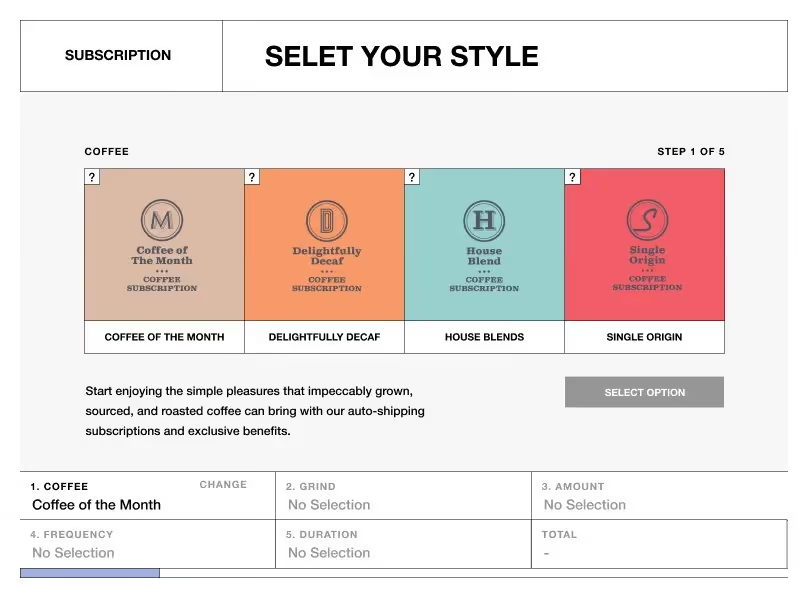
The mechanism is matching, not persuasion. A decision-tree quiz guides new customers to the right beans by brewing method and flavour preference, and a subscription builder on Recharge sets the subscription up to suit them. A renewal rate that high suggests subscribers are on the right product from the first order, not being talked out of leaving.
What results can a business expect from rebuilding an ageing ecommerce platform?
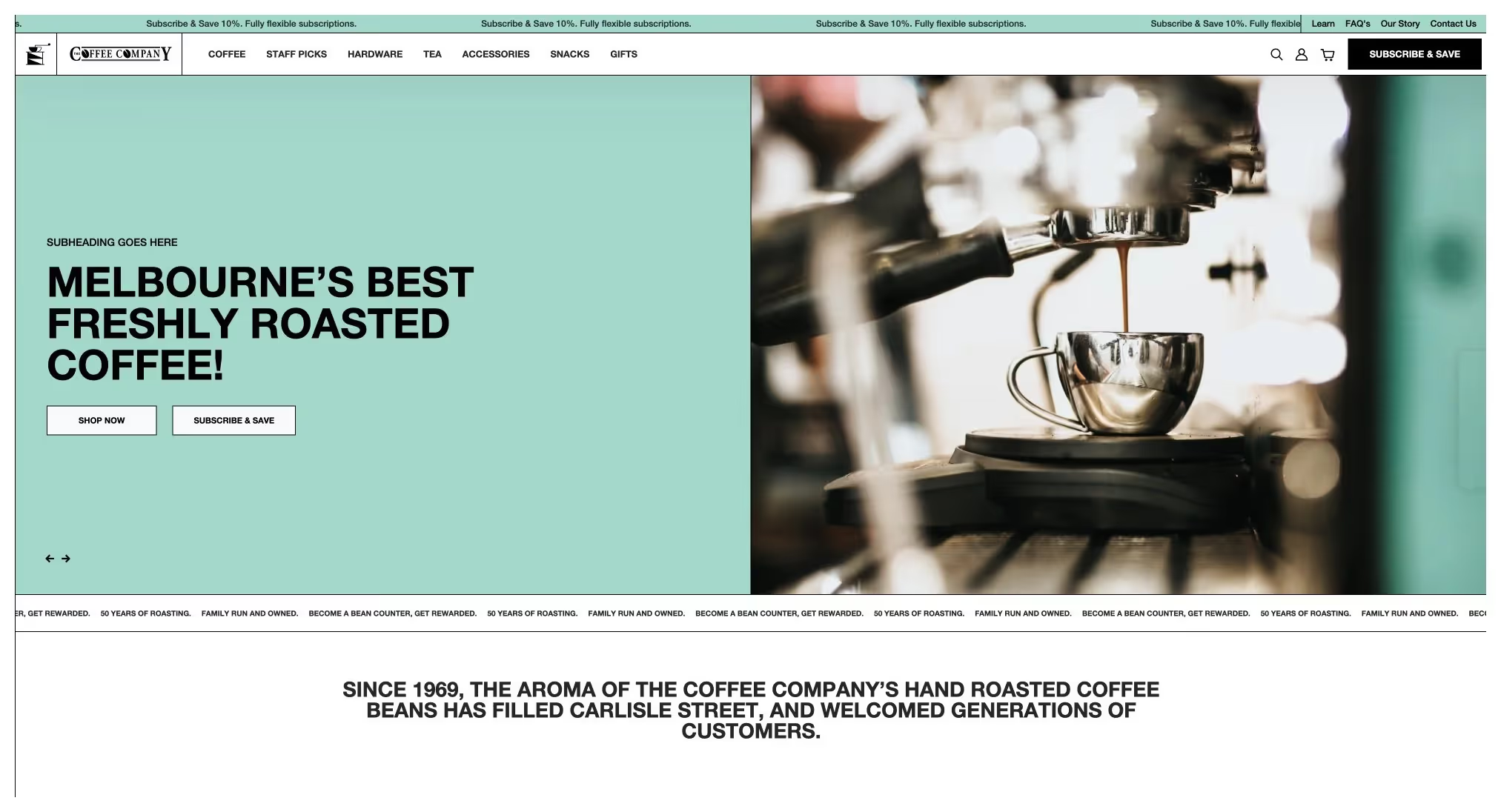
Outcomes vary with what the old platform was actually blocking, so a rebuild only pays off where the constraint was commercial rather than cosmetic. The Coffee Company's legacy site was slow and could not support subscription complexity. Rebuilding headless on Shopify Plus contributed to a 53% increase in revenue between Q1 2023 and Q4 2025.
That figure covers the platform change together with the subscription and discovery work built on top of it, not the replatform in isolation. Average order value rose 17.1% across the same window, so the revenue movement reflects both order growth and larger baskets rather than volume alone.
Do product recommendation quizzes actually increase ecommerce conversion rates?
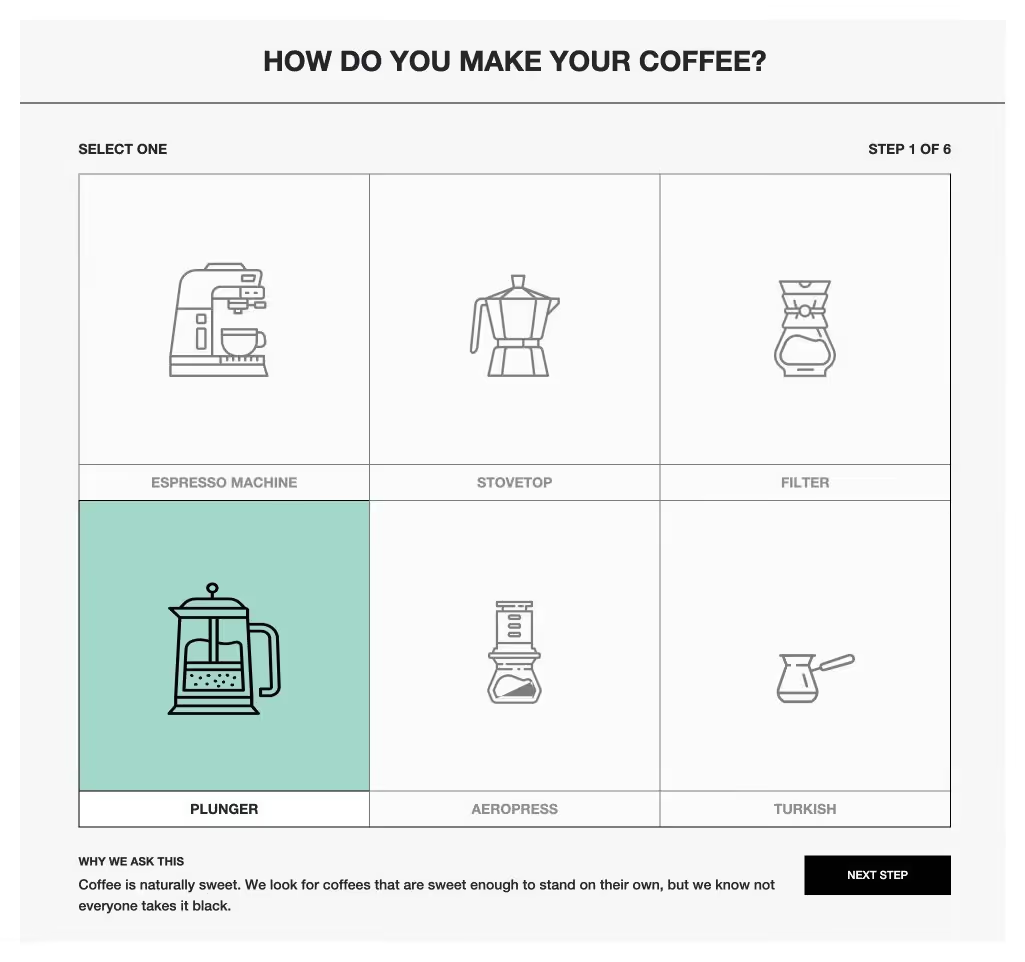
Quizzes help most where choice is genuinely hard: large catalogues, technical attributes, and buyers who don't know what they want. They do little on simple ranges. On The Coffee Company, a decision-tree quiz guiding customers by brewing method and flavour preference was part of work that contributed to a 29% relative increase in conversion rate.
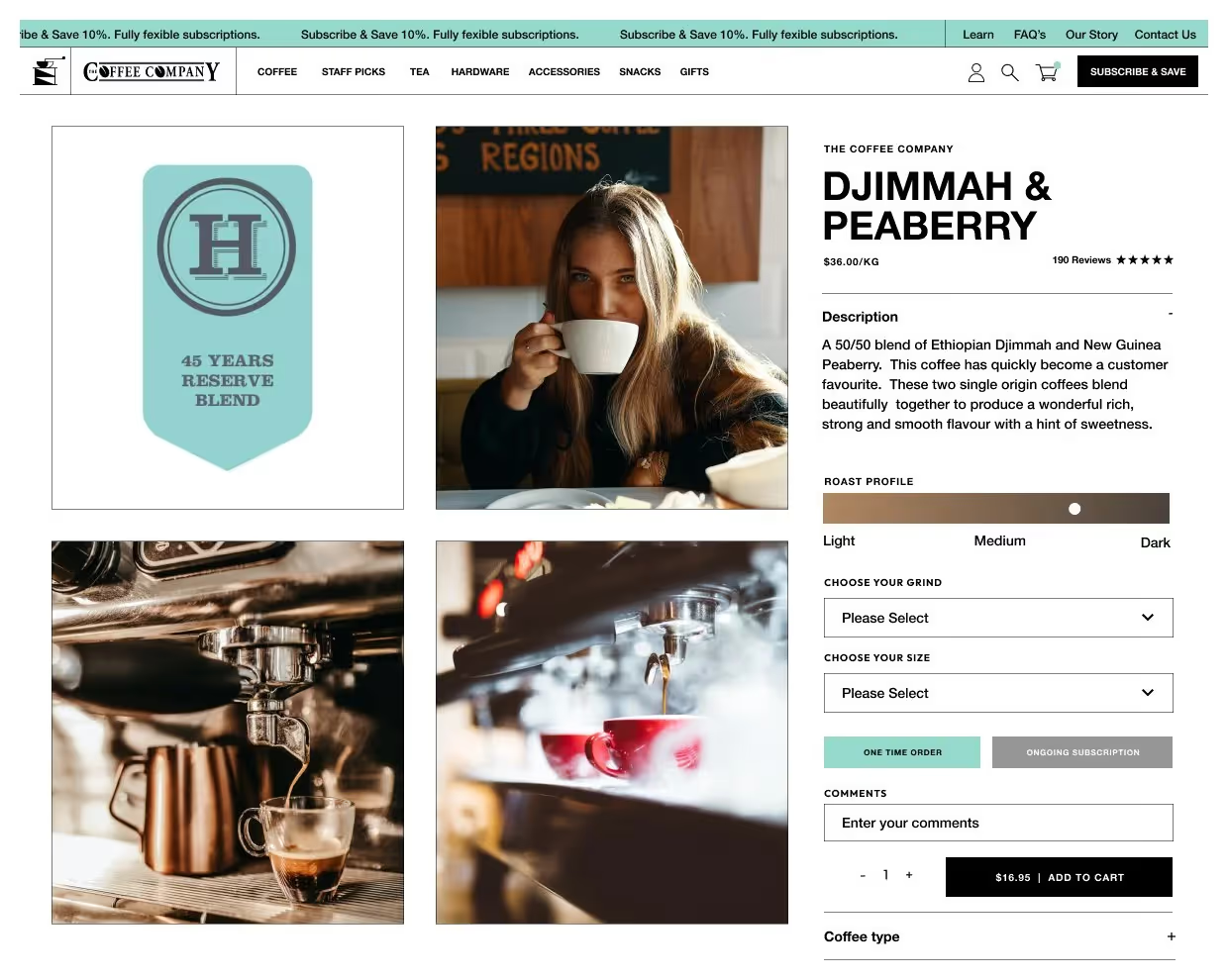
The quiz was not isolated in testing, so it cannot be credited with the full uplift. It ran alongside specialty filtering by origin, roast level and brew method. The mechanism behind both is the same: reduce the number of decisions a first-time buyer has to make unaided.
How many times does a returning ecommerce customer typically order?
Most stores see returning customers order two to three times before lapsing, and consumable categories sit at the higher end because the repurchase decision recurs naturally. At The Coffee Company, returning customers place an average of 3.69 orders, against a repeat customer rate of 32%.
Read those two figures together rather than separately. The repeat rate describes how many customers come back at all; the order average describes how deeply the ones who do return engage. A store can lift either independently, and the levers are different. Note this measures order count, not basket size: more orders does not by itself mean more spend per order.
What share of an ecommerce store's revenue can subscriptions realistically account for?
There is no standard share, and it depends heavily on whether subscriptions are engineered as the core of the business or bolted on as an add-on. Where subscription is the primary growth lever and the product is genuinely consumable, the share can be substantial. At The Coffee Company, subscriptions account for 35% of total revenue.
That share is the product of five years of continuous platform work, not a single launch. It is also a coffee business, where repurchase is inherent to the product. Brands with longer replacement cycles should expect a materially lower ceiling on subscription share regardless of execution quality.
How much more is a subscription customer worth than a one-time customer?
Multiples vary widely by category and by how long the subscription actually lasts, so a single industry number is misleading. What holds is that the gap compounds over time rather than appearing at the first order. At The Coffee Company, subscribers were worth 4.44x non-subscribers on 12-month lifetime value.
The measurement window matters as much as the multiple. This is a 12-month figure, so it captures roughly a year of recurring orders against a comparison group that may buy once or twice. Shorter windows produce much smaller gaps, which is why multiples quoted without a period are hard to compare.